Bangs change the boundary between hair and face, which can make the same face seem more open, shorter or more strongly framed. They do not change facial anatomy, and a shape label cannot tell you how a fringe will behave after a normal morning at home. Before choosing one, decide how much forehead you want to reveal, where you want the shortest pieces to sit, and how much daily styling you accept. Those choices give a stylist something concrete to work with.
Decide what you want to see above the brows
Look at your hair in its usual part with your head level and your expression relaxed. Then move the front sections back so you can see the forehead. Compare those views without changing the camera distance or raising your eyebrows. You are deciding whether you enjoy an open forehead or prefer a line of hair across part of it, not searching for a proportion that everyone must achieve.
A fringe that covers more of the forehead reduces the visible uninterrupted area from hairline to chin. That may create a shorter-looking impression, particularly when its lower edge forms a clear horizontal line. A divided fringe leaves an opening through the middle, so the eye can still follow a vertical space above the brows. The exact effect depends on length, density and the rest of the haircut.
Separate hair volume from forehead coverage. A full fringe paired with a tall crown does not produce the same silhouette as the same fringe beside flatter hair. Similarly, front pieces that spread outward near the cheekbones can add a sense of width. When reviewing a reference picture, look beyond the fringe itself to the placement of volume at the sides and top.
Use plain language to describe the goal: “I want my brows visible,” “I like a soft opening in the middle,” or “I want a stronger line across the forehead.” These requests remain useful even if you are unsure whether your face is oval, round or oblong. Face shape names are styling conventions, and many people fit more than one description.
Compare a full fringe with one that divides
A full fringe makes a more continuous boundary across the upper face. Its edge can be straight, curved or irregular, and its density changes how much skin shows through. A light fringe may separate into small pieces during the day; a dense one makes a more definite band of hair. Neither is automatically softer or easier. The result depends on your hair and how you wear it.
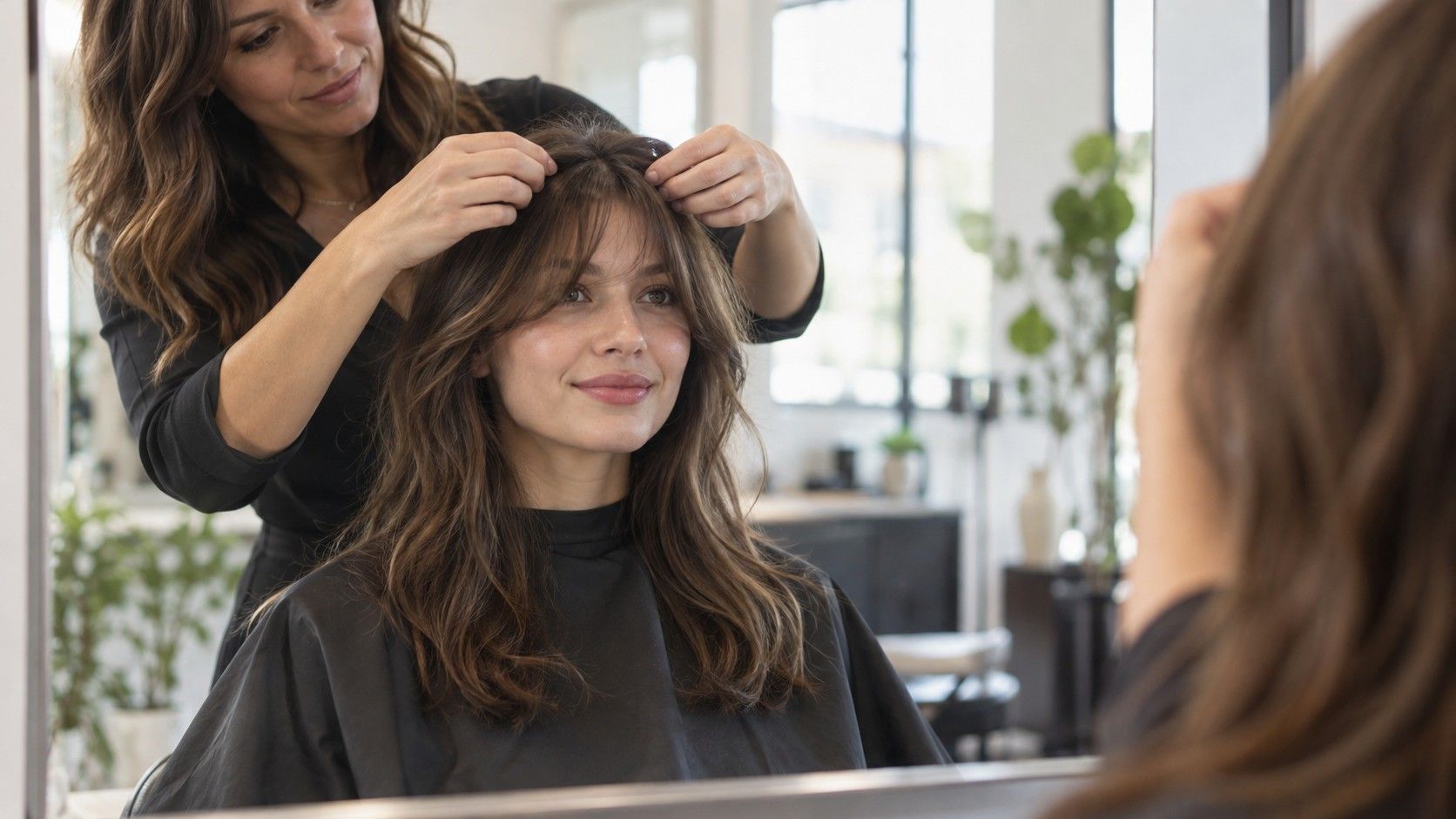
A curtain fringe separates around a part and usually opens toward the sides. It can leave the center of the forehead visible while placing hair beside the eyes or cheeks. The shortest point matters: pieces near the brows behave differently from pieces starting near the cheekbones. Ask to see where the proposed front sections will finish when dry, rather than relying on the name alone.
Side-swept bangs create an angled boundary. They can work with an existing part, but a strong growth direction may resist being pushed the other way. Longer pieces may tuck behind an ear, while shorter ones may fall across an eye. Check which version you mean when showing a picture; two cuts called side-swept can involve very different lengths and daily handling.
| Option to discuss | Visible effect to compare | Practical question before cutting |
|---|---|---|
| Full fringe | A continuous or lightly broken line over the forehead. | Do you want regular trims to keep the edge in place? |
| Divided fringe | An open center with hair framing the sides. | Does your natural part support the opening you want? |
| Side-swept fringe | An angled line with more forehead visible on one side. | Will the shorter pieces stay clear of your eye? |
| Long face-framing pieces | More forehead remains open, with emphasis lower at the sides. | Do you need the front sections to tie back or tuck away? |
Check texture and growth direction before choosing length
Watch what the hair at your front hairline does after an ordinary wash and dry. Does it lift, split or turn to one side? A cowlick can create an opening in a fringe even when you have asked for a continuous edge. Bring that observation to the appointment and show the stylist the hair as it normally sits. A heavily styled reference photo may conceal the growth pattern entirely.
Curly and wavy hair can sit shorter after drying than it appears when stretched or wet. The amount varies with the curl pattern, the cut and the styling method. Discuss the intended dry position and how much movement you want to preserve. A fixed instruction to cut every curly fringe a certain distance longer ignores those differences. Let the consultation account for the hair in front of the stylist.
Density also changes the practical choices. Taking a large section forward creates a different distribution of hair from a small, light fringe. On hair with limited density, that decision can affect how much fullness remains elsewhere. Ask where the fringe section will start and how wide it will be. Seeing the proposed section before the cut helps connect the reference picture to your own hair.
Tell the stylist whether you normally air-dry, blow-dry or use heat tools. A fringe that looks easy after a salon finish may require a routine you do not want at home. Ask what the front will probably do with your usual method and what adjustment might be needed. It is reasonable to choose a less demanding version even if a different one looks striking in the reference photo.
Place the shortest pieces around glasses and daily movement
Bring the glasses you wear most often to the appointment. A fringe can rest on the upper rim, separate around it or catch as you take the frame off. Look straight ahead and then down, as you would when reading. Pieces that seem clear of the lenses in a posed view may fall forward when your head moves.
Consider your eyebrows too. If you like their outline visible, say so before a dense fringe is cut to brow level. If you prefer hair that overlaps them, discuss where the dry edge should sit. There is no compulsory gap between brows and bangs. The useful question is whether the line stays where you want it during ordinary movement without constant correction.
Check the sides with hair tucked behind the ears and then loose. Tell the stylist whether the front must reach a clip, an ear or a hair tie for work or exercise. A small difference in length can affect that convenience.
A hat, work headset or helmet can change how the fringe settles. Think about the items you actually use instead of assuming the style will stay as arranged in a mirror. You may want front pieces that can be swept aside or secured. The best placement for your routine can be different from the shortest point shown in an inspiration image.
Test the outline without treating the preview as a promise
Pinning longer front sections can suggest forehead coverage. A clip-in fringe can also help compare an open view with a covered one, if its texture and density are close enough to your hair. Keep the preview modest: it shows an approximate boundary, not the movement, growth pattern or maintenance of a real cut.
Take a straight-on picture with your usual hairstyle, then another with the temporary fringe in place. Keep the distance, light and head angle consistent. Ask what changed in the framing: is the forehead more covered, are the eyes more prominent, or do the side pieces draw attention toward the cheeks? Avoid judging the entire result from a close selfie taken at a different angle.
When comparing bangs and face shape advice online, keep the features you like and discard absolute bans. Someone with a round outline may enjoy a full fringe; someone with a long outline may prefer an open forehead. A styling choice can emphasize existing proportions because you like them.
Plan the next morning and the months after it
Before cutting, ask for an explanation of the daily routine: how to dry the front, what to do when it separates, and which tools are actually needed. Be specific about your available time. A fringe that requires attention every morning is a different commitment from longer pieces you can leave to fall naturally. Neither is a failure; they suit different routines.
Discuss trims while the planned length is clear. A short, precise edge can need attention sooner than a long divided fringe, but growth and your preferred position vary. Ask what signs indicate it is time to return rather than assuming a universal schedule. Avoid cutting upward into a troublesome section in a rush before leaving home; show the issue at the next appointment.
Finally, think through the grow-out stage. Short pieces must gain length before they tuck behind an ear or join the rest of the hair. Clips, a changed part or a gradual reshaping may help during that period. If having hair across the forehead would be uncomfortable at work or during exercise, choose a version with that constraint in mind. A useful decision balances the look you want with the way you live in the haircut.