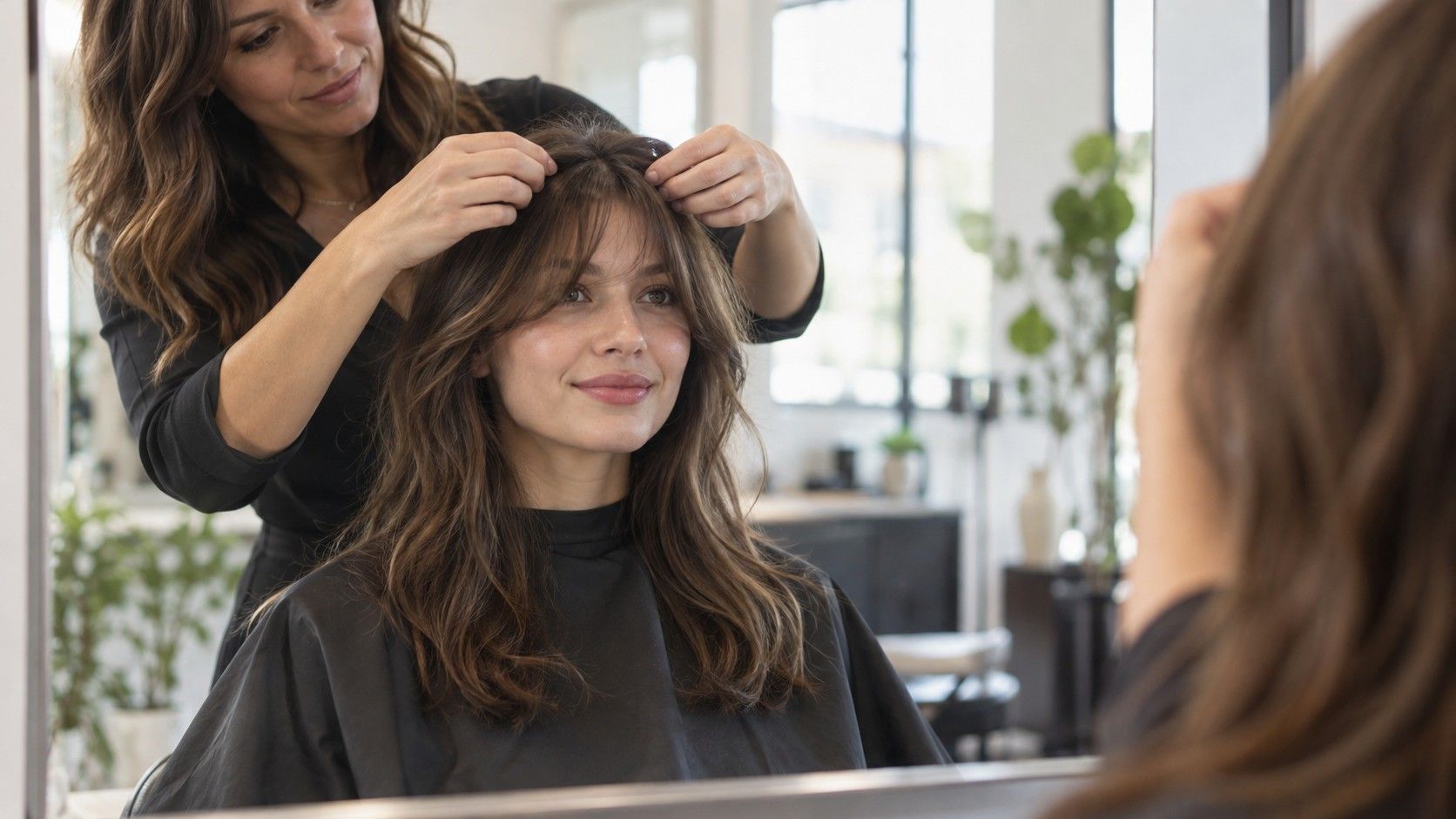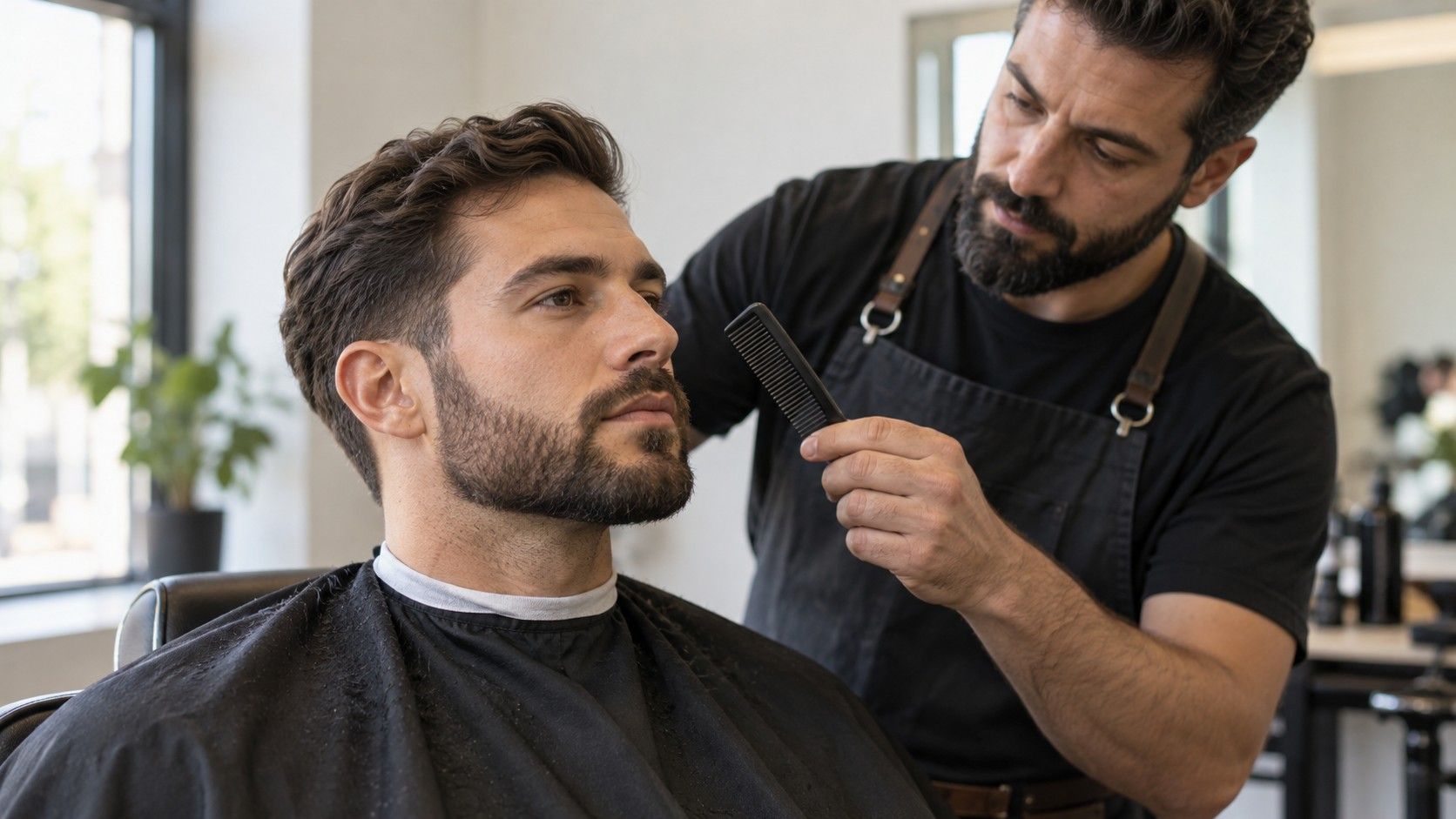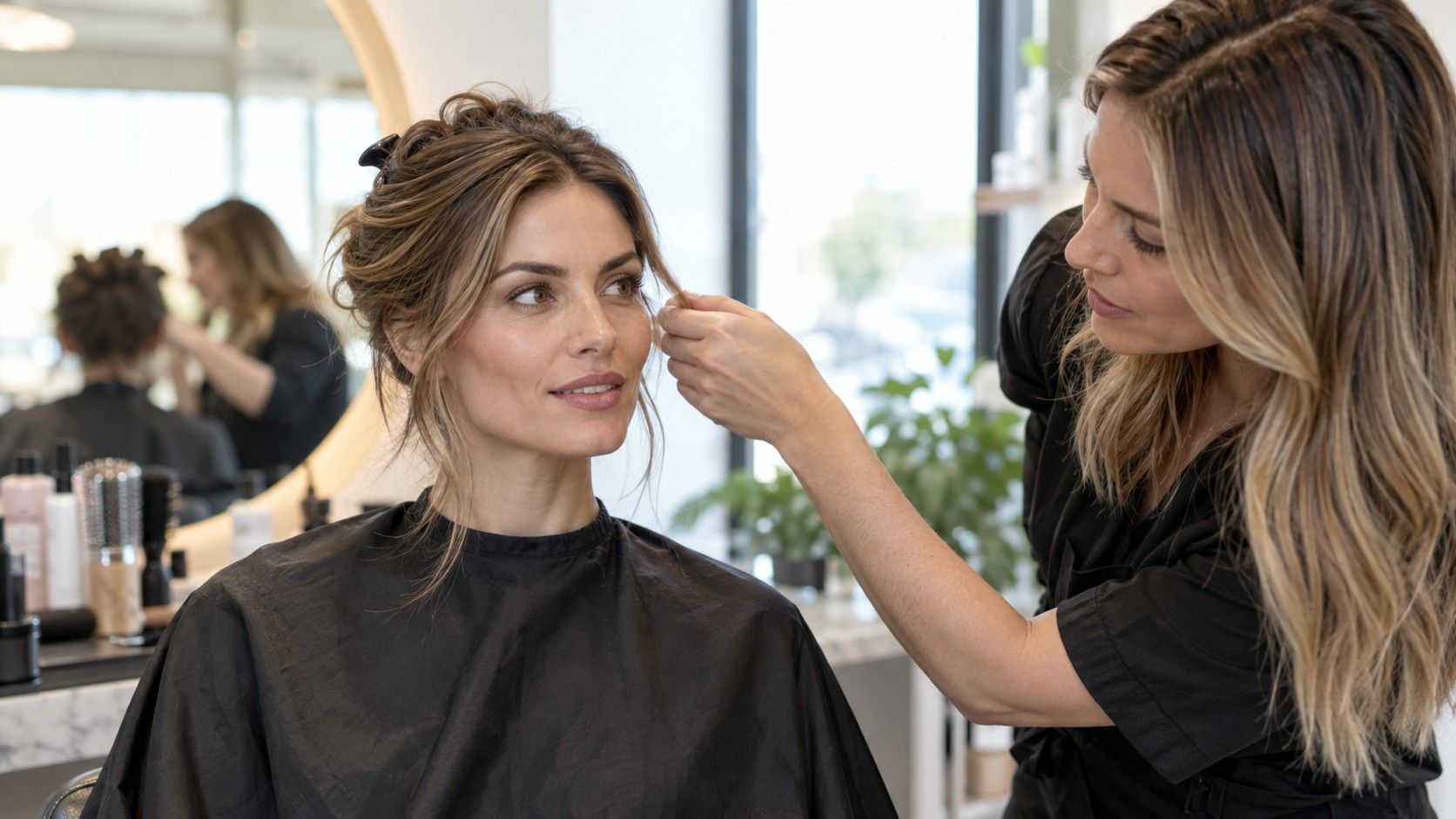
A narrow chin appears in both heart and diamond face descriptions, so starting there often leaves the comparison unresolved. The more useful distinction sits higher up: how the forehead and temples compare with the cheekbones. When looking at a heart vs diamond face, follow the whole outline with your hair moved aside and your expression relaxed. You may find a clear resemblance to one category, or a mixture that is easier to describe in ordinary words. Either can support practical choices about hair and glasses.
Locate the widest area before judging the chin
Face a mirror with your head upright and look across three areas: the upper forehead, the cheekbones and the lower jaw. In common styling descriptions, a heart-shaped face has a relatively broad upper area that tapers toward a narrower chin. A diamond face shape is usually described as widest around the cheekbones, with a narrower forehead and lower jaw. These are sketch-like descriptions rather than diagnostic categories.
The comparison becomes easier when you stop looking for a perfect point at the chin. A softly rounded chin can sit beneath either outline. Instead, ask whether the upper sides look relatively full or whether the outline moves noticeably inward above the cheekbones. Do this on both sides. Ordinary asymmetry means that one side may make a stronger impression than the other.
Stand in even light and keep your mouth relaxed. A smile changes the cheek area, while a raised chin changes how much of the lower face you see. If you use a photograph, choose a front-facing view with the camera around eye level and avoid a close wide-angle selfie. The goal is a repeatable view, not a more flattering pose or a photograph that proves a preferred category.
Move the hair before comparing forehead width
A side fringe can hide the outer forehead and make the cheekbones appear to be the widest area. Hair sitting beside the temples can do the opposite by adding width to the upper silhouette. Gently move the hair aside, leaving your head and expression in the same position. Compare the visible face first, then let the hair fall back into its usual place and notice the difference.
Look at the sides of the forehead as well as the centre of the hairline. A widow's peak is a hairline feature; it does not establish a heart-shaped face on its own. Someone with a straight central hairline can still have a relatively broad forehead and tapering lower face. Someone with a central point may have cheekbones that are clearly wider than the upper face.
It also helps to distinguish the hairline from the temples. Recession, a very low fringe or curls covering the sides can make the upper boundary difficult to judge. You do not have to force a measurement through an unclear area. Write down what is observable, such as “cheekbones look wider than the visible forehead with hair pulled back,” and leave the uncertain part open.
| Feature to compare | Heart description often suggests | Diamond description often suggests |
|---|---|---|
| Upper face beside the forehead | A relatively broad upper outline | A narrower upper outline than at the cheeks |
| Cheekbone area | May be broad, without a strong inward change above it | Often the most prominent width in the outline |
| Lower jaw and chin | A taper from the broader upper face | A taper below the cheekbones |
| What the chin alone establishes | Very little without the upper comparison | Very little without the upper comparison |
Follow the transition from cheekbones to jaw
Once the upper comparison is clear, trace the outer line down from the cheekbones. Notice whether it narrows gradually or changes direction more distinctly. The heart and diamond descriptions both allow a narrower lower face, but the relationship above the cheeks helps separate them. Do not use a hollow or shadow below one cheek as a substitute for the whole outline.
Lighting can exaggerate this transition. Side light makes one cheekbone stand out and leaves a dark area beneath it; overhead light may emphasise the eye sockets and lower cheeks. Check a second view in diffuse daylight if the distinction depends on a single hard shadow. Keep the camera distance and head position similar so you are changing one useful variable rather than several at once.
If measurements help you focus, use the same method across each area and note the landmarks. A tape laid around the surface of the cheeks is not directly comparable with a straight width taken from a picture. Small differences can also reflect where you placed the tape. Treat the numbers as notes supporting the visual comparison, with no fixed ratio that turns one category into the other.
Leave room for soft edges and mixed features
You might see broad cheekbones together with a fairly broad forehead. That can sit between simplified heart and diamond drawings. A longer face, a rounded chin or soft cheek contours may make the match less obvious still. There is no requirement to remove these details from your description so that one label fits. They are often the details that matter when you try a hairstyle.
A useful note might read “widest at the cheeks, slightly narrower at the temples, with a soft taper to the chin.” Another might be “broad forehead and cheeks, narrow lower face.” Those descriptions survive a change of chart because they say what you observed. They also avoid attaching claims about personality, health or attractiveness to a styling category that cannot establish any of those things.
If two photographs suggest different labels, check the conditions before comparing the result. Was one taken from above? Did a fringe cover a temple? Was the camera much closer? Keep a neutral reference view if that is useful, but resist an endless search for agreement across every image. Faces move, hairstyles change and photographs are projections; a styling description only needs to help with the decision in front of you.
Translate the comparison into hair and frame trials
For hair, decide which part of the outline you want to expose, echo or soften. Someone who likes visible cheekbones might enjoy hair tucked behind the ears. Someone who prefers more width around the lower face could test movement or volume near that area. Neither choice follows automatically from heart or diamond. Your hair's density, curl pattern and the time you spend styling it set practical limits.
A fringe trial can be useful when forehead width is your main concern. Before committing to a cut, move a section of hair across the forehead or use a temporary styling arrangement to see how a shorter upper outline feels. This will not reproduce a finished haircut, but it can identify a preference worth discussing. Ask a stylist how the proposed fringe will sit with your natural texture and how often it will need trimming.
With glasses, compare pairs at a similar width and change the outline or visual weight. A more pronounced upper rim draws attention differently from a thin, evenly weighted frame. Rounded and angular corners may echo or contrast with the cheeks. Try both while looking straight ahead, then smile and turn slightly. There is no universal rule that one of these categories must wear a particular frame silhouette.
Check comfort separately from appearance. Look for pressure at the temples, a bridge that slips and lower rims that touch your cheeks when you smile. A frame can look convincing in a still photograph yet move awkwardly during ordinary use. If fit is wrong, try a different size or bridge design before rejecting an entire shape. Your face label cannot account for those construction details.
End the comparison with a choice you can test: expose the temples, try a softer fringe, compare two rim styles, or keep the hair you already enjoy. A mixed label is perfectly workable if it helps you explain that choice. Forehead, cheekbones and chin are reference points for describing an outline; the final haircut or pair of glasses should suit how you live and what you like seeing in the mirror.