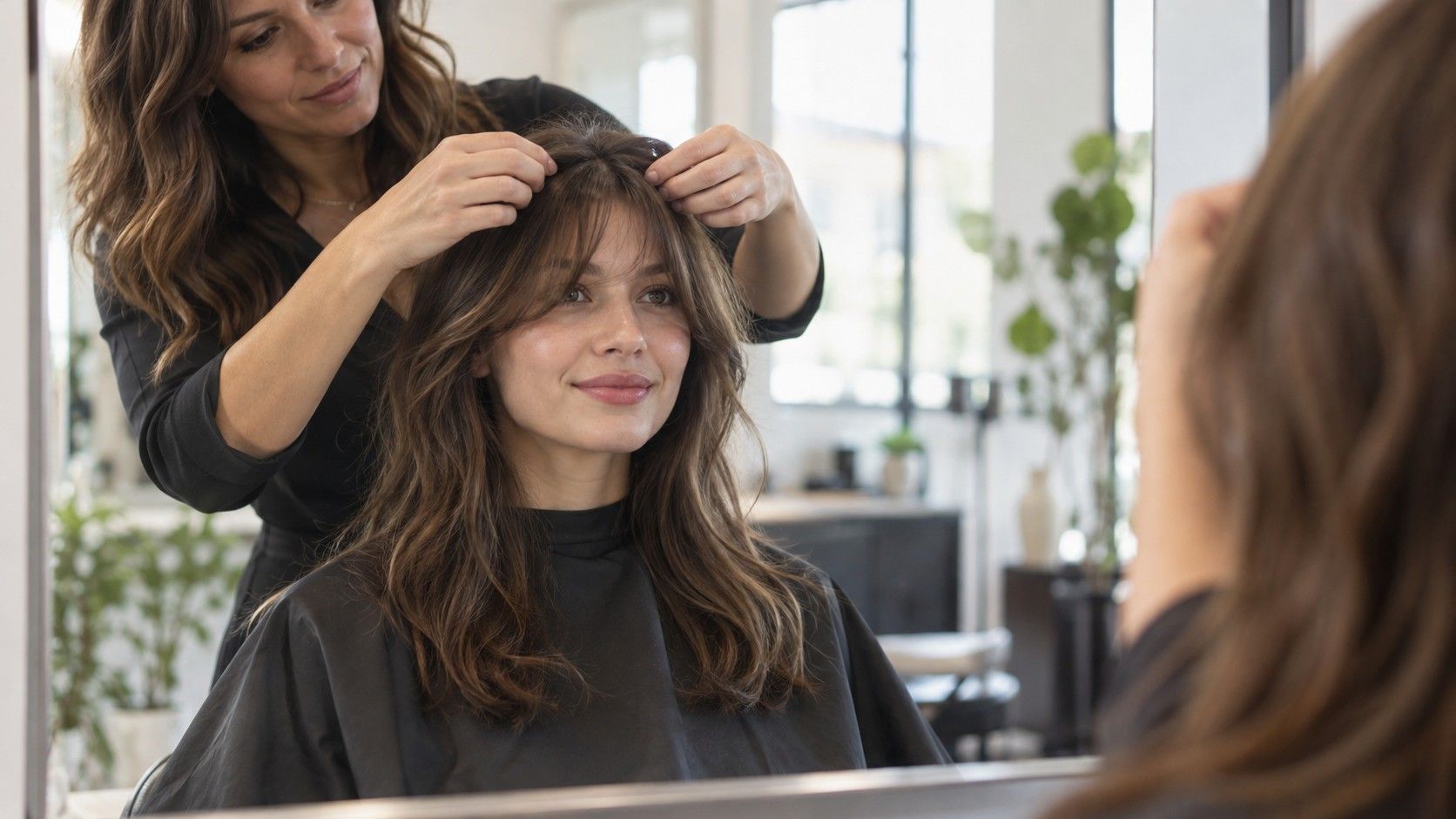
Long hair gives you several ways to change the outline around your face without giving up much overall length. The useful choice is often where the hair opens, where it gains volume and where the shorter pieces end. Searching for long hairstyles by face shape can suggest ideas, but a category cannot account for your curl pattern, density or habit of tying everything back. Start with the effect you want to try, then build a cut and routine that can produce it on an ordinary day.
Choose where you want the visible width to sit
Look at your hair from the front with your head upright, then move it away from your face. Notice what the hair contributes to the outline. It may create width beside the cheeks, leave two long vertical lines beside the jaw or add height above the forehead. Those effects can matter more to a haircut decision than whether a chart calls your face oval, round or rectangular.
If you want more movement beside the lower face, consider where a bend or a shorter section might sit. If you like the sides open, notice how the outline changes when you tuck the hair behind your ears. Neither preference is a correction your face needs. The aim is to describe an effect you enjoy clearly enough that a stylist can explain which cuts might produce it with your hair.
Length and width work together visually, so avoid reducing the choice to one rule. Long, straight sections may emphasise a vertical outline; waves that spread beside the cheeks may make that area more noticeable. Yet volume at the roots, a fringe and the position of the ends can change the same cut's appearance. Compare the whole silhouette rather than assuming that long hair always makes every face look longer.
Place face-framing layers around your daily habits
Face-framing layers are shorter sections around the front, but the phrase does not specify their starting point, weight or behaviour. Ask where the shortest piece will fall when your hair is dry and left in its usual texture. A piece near the cheekbone gives a different result from one beginning around the chin. It may also behave differently when you tuck it back or tie the rest of the hair up.
Tell the stylist if a ponytail, bun or braid is part of most days. A shorter front section may fall out, and that can be pleasant or irritating depending on what you need. Think about glasses, work equipment and hair falling forward while you read. The right starting point for a layer should account for those habits as well as the shape you see while standing still in a mirror.
Bring a reference image and point to the specific detail you like. You might enjoy the open area around the eyes, the curve beside the jaw or the movement near the shoulders. Ask whether that result comes from the cut, the styling or both. A reference with a round-brush finish may depend on work you do not want to repeat. It is better to discuss that before removing the length needed for a simpler tied-back style.
You can also request a modest first change. A longer starting point may let you test how front pieces behave before choosing something shorter at a later appointment. This is a preference to discuss rather than a guarantee of a particular result. The stylist can explain the limitations of your current cut and how the proposed pieces connect with the remaining length.
Try a different parting before cutting the front
A parting changes how the hair divides across the forehead and where the front sections fall. Try a centre part, a slight offset and a more noticeable side part with the length you already have. Keep your head position similar and let the hair settle rather than holding it in place for a photograph. You may discover that the outline you want needs a styling adjustment rather than shorter layers.
A centre part can create a more even division, while an offset part may give one side more visible weight. Whether that feels right depends on your hair and preferences. Growth patterns can resist a new position, and the two sides may not sit alike. A result that looks promising for a moment but collapses when you move is useful information for a consultation.
Test the parting after your usual wash and dry, not solely on hair arranged for a special occasion. Notice how long it stays where you put it and how much product or heat it requires. If your routine normally involves air drying, include an air-dried trial. There is little value in choosing a parting for its visual effect if keeping it there becomes a daily task you resent.
| Change to explore | A trial before the cut | Question for the stylist |
|---|---|---|
| More openness around the cheeks | Tuck the sides away and compare the outline | Which pieces would stay back in my usual routine? |
| Movement beside the jaw | Observe where existing waves or bends sit | Where would the shortest layer fall when dry? |
| Different weight across the forehead | Try several partings after a normal wash | How will my growth pattern affect this? |
| Length that still ties back | Check which front sections reach your usual tie | How much shorter can they go while keeping that option? |
Keep texture and density in the conversation
Two people can request the same outline and need different cuts to approach it. Fine strands and low density are separate considerations: one describes the individual strands, the other how much hair there is. Explain what you notice rather than choosing a technical label you are unsure about. Perhaps the ends look sparse, the sides feel bulky or the front loses its shape quickly.
Layers redistribute the visible weight of a cut, but adding more is not an automatic route to better movement. If you value a substantial-looking edge, discuss how much hair will remain at the ends. If the sides feel heavy, ask where weight could be changed without sacrificing the length or fullness you enjoy. The answer should come from seeing your hair, not from a face shape chart alone.
Waves and curls need particular attention to how the front settles when dry. A section pulled straight for comparison may sit much higher in its normal pattern. Ask how the stylist will judge the intended dry length and whether the proposed shape depends on stretching or smoothing the hair. Use photographs of your own everyday texture alongside reference images, so that the conversation starts from the hair you actually wear.
For straighter hair, notice whether shorter sections bend naturally or hang as separate pieces. If a sweeping shape in a photograph requires a blow-dry, decide whether you want to learn that routine. There is no obligation to create extra volume or disguise the natural fall of the hair. A simpler, heavier outline may be the choice you prefer, even when a layered example initially caught your attention.
Check the cut with the drying routine you will keep
Before agreeing to the final shape, describe your ordinary morning in concrete terms. Say whether you wash at night, use a dryer, leave the house with damp hair or wear it tied back for work. Mention the time you are willing to spend and the tools you already use. “Easy to style” is too vague when one person means a quick comb and another means a careful brush-and-dryer finish.
Ask to see how the front sections are intended to sit and how to reproduce that movement. You may need to watch the direction of the brush or the way the hair is divided. If the method feels too involved, say so while there is still time to discuss another approach. A realistic demonstration makes it easier to separate the structure of the cut from a finish created for the appointment.
At home, give yourself a few normal styling attempts before deciding what needs attention. Note the specific issue: a front piece falls into your eyes, the ends feel too light or the parting will not hold. Those observations are more helpful than concluding that the haircut failed because your face shape label was wrong. Contact the salon about adjustments and its timing policy rather than repeatedly shortening the pieces yourself.
Keep the final decision personal and practical. You may enjoy long hair with minimal layering, a fuller fringe, a soft sweep or a largely open face. Face proportions can help you describe the outline you want, while texture, density and upkeep determine whether the proposal fits your life. A successful consultation ends with a clear account of the dry length, the styling required and the parts of your existing routine you want to keep.