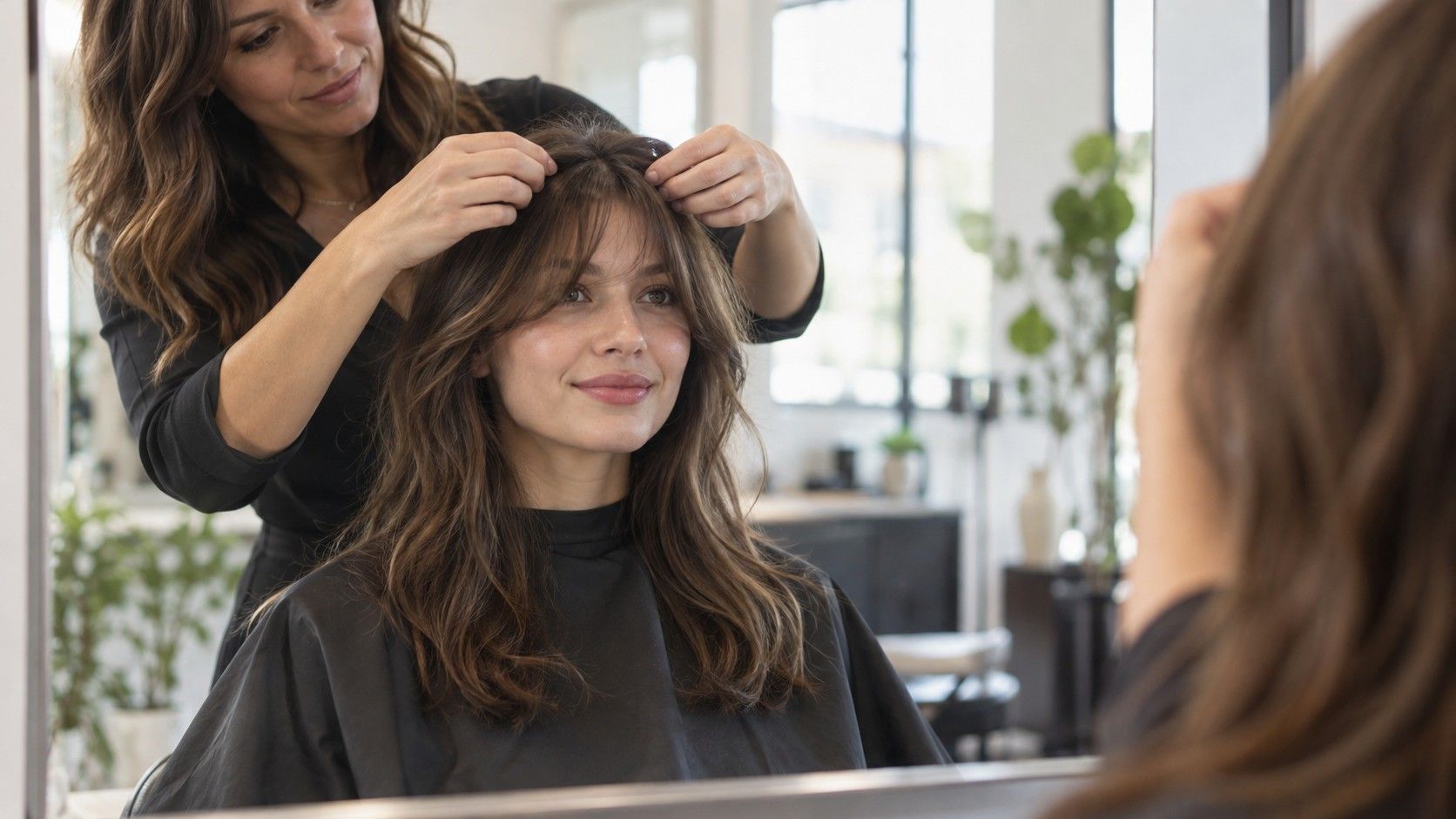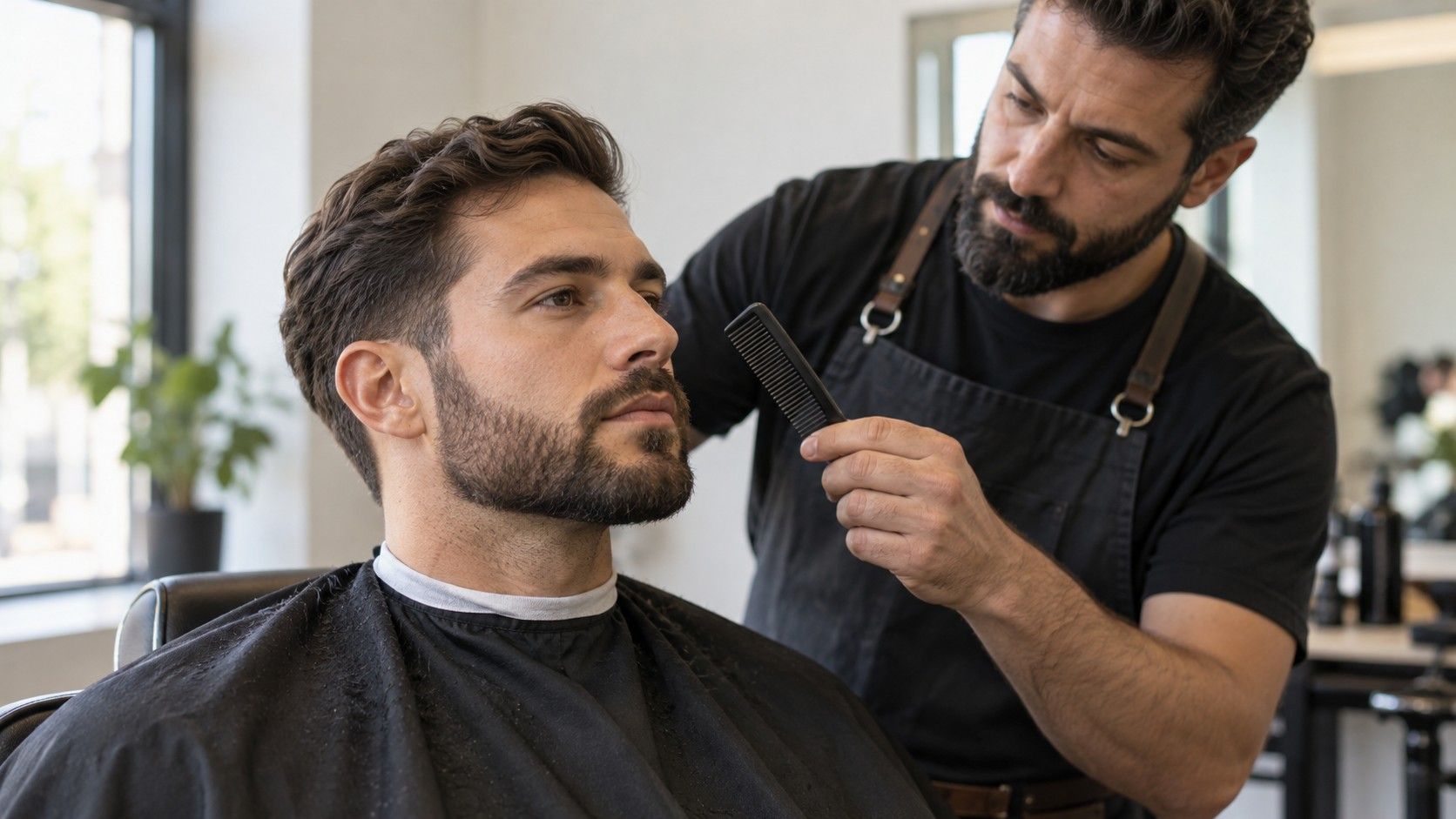
Oval and oblong are easy to confuse because both can describe a face that looks longer than it is wide. The useful difference is the overall impression: an oval outline usually suggests gradual taper, while oblong emphasizes length. Neither is a diagnosis or a category with a universally agreed numerical boundary. Comparing an oval vs oblong face works best when you look at the whole outline, remove the effects of hair and camera position, and keep the features that matter for your next styling decision.
Start with a neutral view of length and width
Pull hair away from the forehead and temples, face a mirror directly and let your expression relax. Keep your head level. Tilting the chin upward or downward changes how much of the lower face is visible, and a close selfie can alter apparent proportions. For a reference photo, place the camera near eye level at a comfortable distance and crop afterward. Use that same setup for the next comparison.
Look from the visible hairline to the bottom of the chin, then across the cheekbones. Does the length dominate immediately, or do you first notice a smooth, gently narrowing outline? Both answers may describe a face longer than wide. “Long” is a comparative impression here; it does not establish a separate anatomical type or imply anything about how someone should look.
A tape can help if the mirror leaves you uncertain. Record face length and cheekbone width using consistent landmarks, then note forehead and jaw width. Repeat uncertain readings. Do not switch between a tape wrapped around the cheek and a straight measurement across a photograph and expect the values to match. The purpose is to spot broad relationships, not to find a decimal that unlocks the correct name.
A high or irregular hairline complicates length measurements. If the central hairline is unclear, write that down and give more weight to the rest of the outline. A number built on a guessed starting point should not overrule what you consistently see. There is no universal validated cutoff that makes a face oval on one side of a ratio and oblong on the other.
Look for taper along the sides, not just at the chin
Trace the outline visually from each temple through the cheekbones to the jaw. In descriptions commonly called oval, the sides tend to narrow gradually below the cheeks, without strong corners taking over the outline. The forehead and chin may both look softly rounded. In descriptions called oblong, the face's length tends to be more noticeable, sometimes with more similar widths through the forehead, cheeks and jaw.
Those are tendencies, not entry requirements. An oblong face can have a rounded jaw, and an oval face can have some angular features. A narrow chin alone settles very little. Compare the space above it: do the sides taper through the lower cheeks, or remain relatively straight before turning inward near the chin? That extra check prevents one small feature from carrying the whole decision.
Lighting can sharpen or soften the apparent edge. If one jaw corner looks much stronger than the other, try even front light and relax your mouth before drawing a conclusion. Ordinary asymmetry can remain visible; matching sides are not a requirement for a descriptive label.
| What you are comparing | Often described as oval | Often described as oblong |
|---|---|---|
| First impression | Length with a smooth, balanced taper. | Length is the most noticeable feature. |
| Side outline | Gradual narrowing below the cheekbones. | May look relatively straight over more of its length. |
| Jaw and chin | Often softly rounded, with a narrower lower face. | Can be rounded or angular; the label does not specify one chin. |
| Useful styling question | Where do you want more definition or volume? | Do you want to emphasize length or add visual width? |
| When the comparison is unclear | Keep a combined description such as long oval and name the features you can see. | |
Check what a fringe, beard or hairstyle is hiding
A fringe shortens the visible area between the hairline and chin, which can make a long outline seem less pronounced. That is a styling effect, not evidence that the underlying proportions changed. Lift the fringe for the first check, then let it fall naturally and compare. Both views are useful: one helps describe the face, the other shows how your current hair frames it.
Volume above the forehead can extend the total silhouette even though it adds nothing to the measured face. A tall quiff and close sides may therefore make an oval face read as longer in a photograph. Conversely, hair that spreads beside the cheeks can shift attention toward width. Separate the hair silhouette from the face outline before deciding that two photos prove different categories.
A beard adds another boundary. A long pointed beard can draw the eye downward; fullness around the sides of the jaw can create a wider impression. If you cannot see the jaw under facial hair, mark that feature as uncertain. Guessing a hidden angle and treating the guess as a measurement gives false confidence. You can still make grooming choices based on the visible beard outline.
Try small styling changes before committing to a cut
If your practical question is about hair, decide which effect you actually want. Someone with a long face shape may enjoy emphasizing length; someone with similar proportions may prefer a wider silhouette. Shape advice becomes unhelpful when it assumes every person wants the same visual balance. Choose an aim, then compare the options that could produce it.
To explore width, try arranging some hair beside the cheeks rather than stacking all the volume at the crown. To explore an open outline, move the front sections away from the face. Take two pictures with the camera and lighting unchanged. You are comparing where the hair draws attention, not conducting a test of whether your face belongs to a category.
A temporary pinned fringe can help you imagine a new boundary near the forehead, but it cannot predict how a real fringe behaves. Growth direction, curl, density and humidity all affect the result. Before cutting, show a stylist the effect you want and explain how you dry your hair on an ordinary morning. A face label does not communicate a cowlick or a five-minute styling limit.
For facial hair, assess the current outline from the front and side before shortening it. If you want less apparent length, discuss reducing downward extension while retaining some side fullness. Make changes gradually where possible so you can compare. The direction of the experiment matters more than following a beard diagram intended for a different growth pattern.
Choose glasses by fit, then compare the visual effect
An oval or oblong label cannot tell you the correct frame size. Start with a bridge that sits comfortably, temples that do not pinch and lenses positioned appropriately for your prescription. Notice whether the frame slips when you look down or touches your cheeks when you smile. A visually appealing outline that keeps moving will be frustrating in daily use.
Once the fit works, compare frame depth and width. A deeper lens shape creates a different area of emphasis from a shallow one; a broad frame may draw attention sideways. These are options to test, not guaranteed corrections. View each pair straight on at the same distance and ask what you notice first. Keep the lighting consistent so reflections do not become the deciding feature.
Bring your usual hairstyle back into the comparison. A frame that seems dominant with hair pulled tight can feel quite different beside a fringe or fuller curls. Try the glasses as you intend to wear them, and consider how the top line relates to your brows. Personal taste, lens needs and comfort can reasonably outweigh any general suggestion associated with a face shape.
Keep a description when one label feels too narrow
You may finish with “long oval, rounded chin, cheekbones slightly wider than the jaw.” That is a useful result. It gives a stylist or optician more concrete information than insisting on oval or oblong while leaving the individual features unexplained. A mixed description also makes sense when your outline sits between the examples in different guides.
If the label changes every time you use a different picture, return to the neutral view once and note what stays consistent. Length, taper and jaw definition are separate observations; you can be confident about one and uncertain about another. Avoid repeating the exercise until the pictures happen to agree. A close selfie, a smile and a new hairstyle are different viewing conditions.
For the next decision, retain two things: the feature you want to work with and the effect you would like to try. “Keep some width beside the cheeks” or “show more of the jaw” is actionable. The oval versus oblong question has done its job when it helps you explain that preference, even if a single shape name never feels exact.