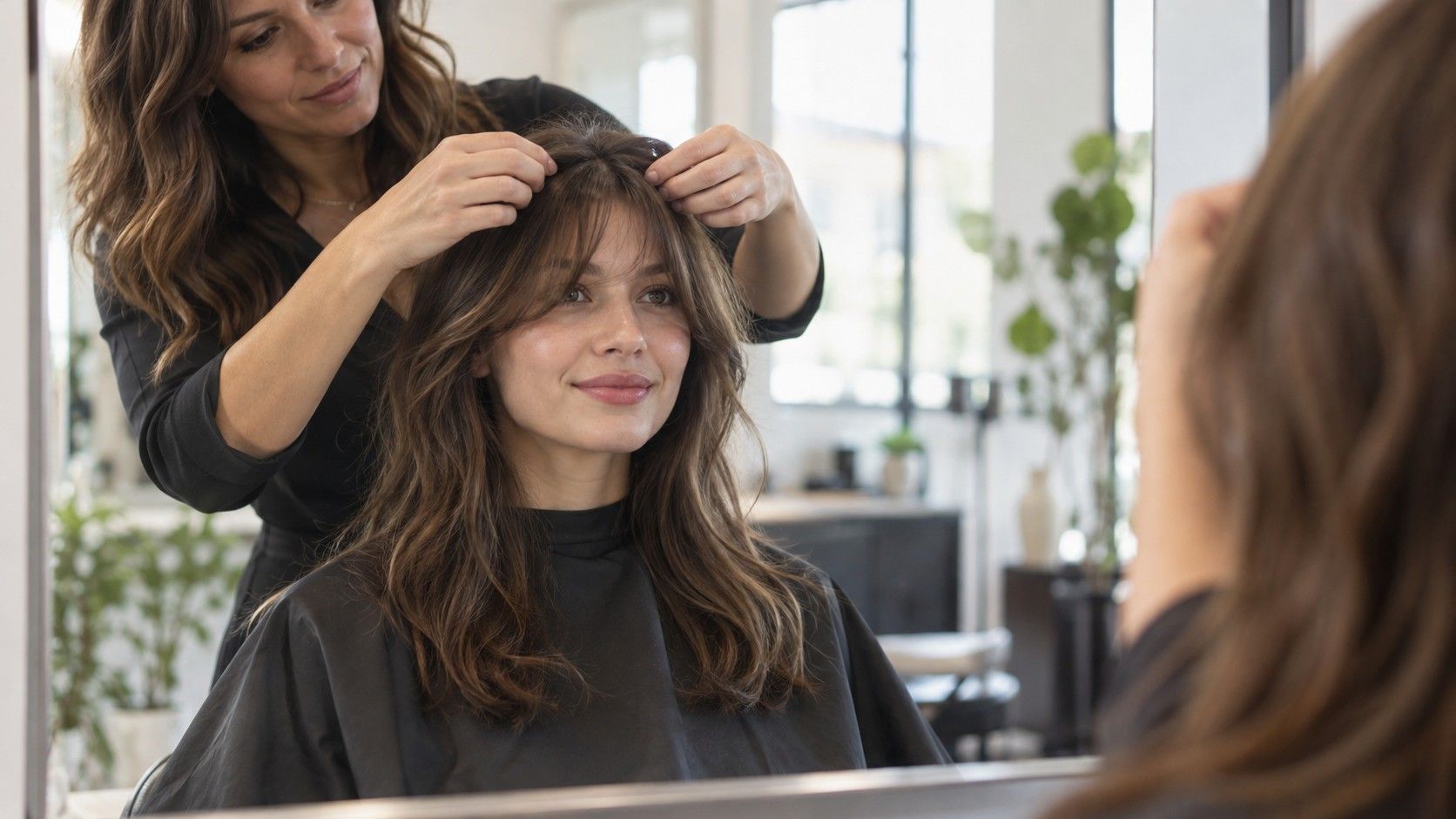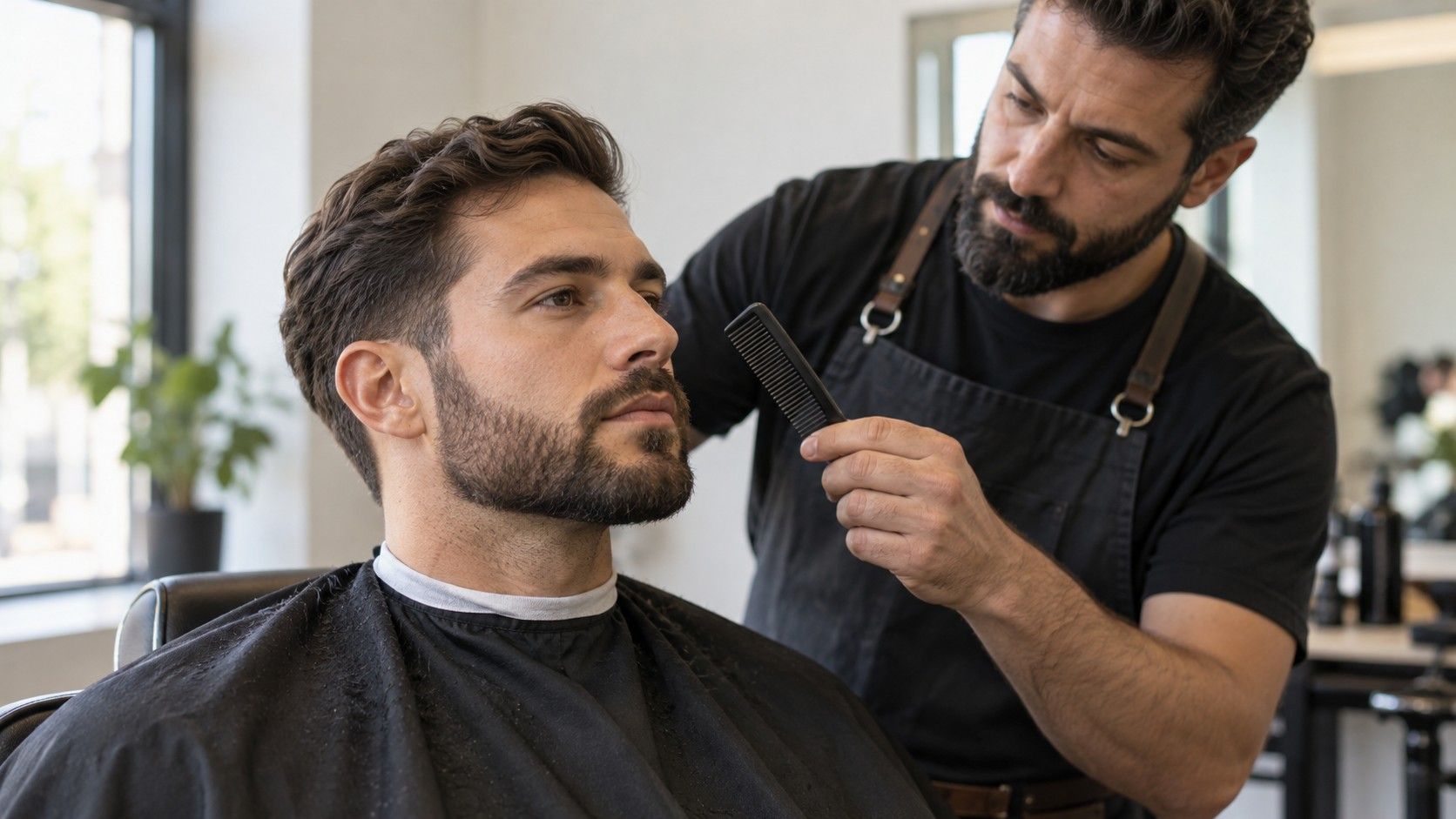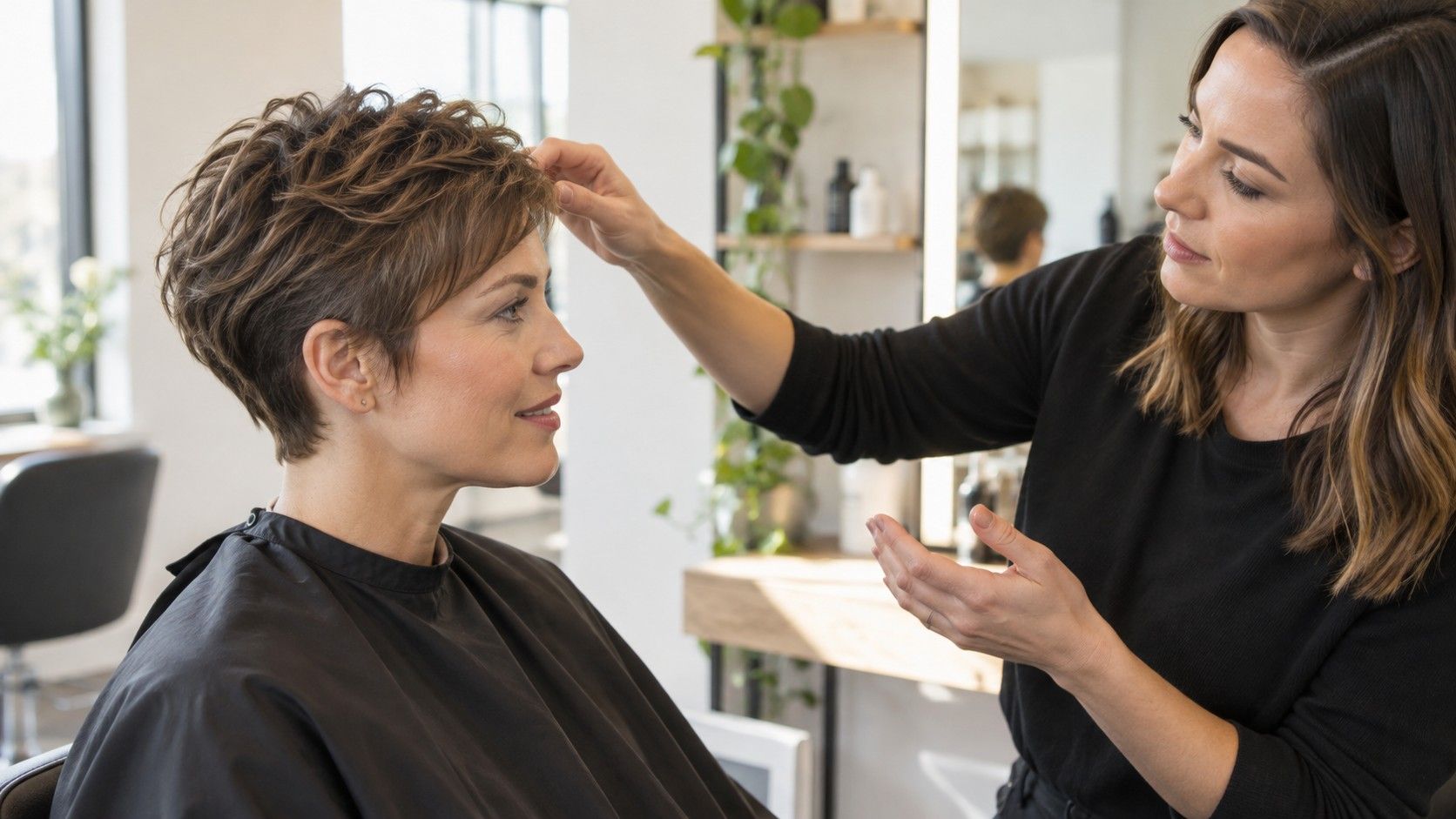
A short haircut exposes details that longer hair can hide: the direction of a fringe, a strong crown, the outline around the ears and the way the nape grows. A face-shape label offers little guidance on those practical decisions. A useful consultation connects the shape you want with the hair you have and the routine you will actually follow. Arrive ready to discuss specific lengths and limits, even if you have not chosen between a pixie and a crop.
Bring a goal beyond your face-shape label
Start with what you want to change. You might want less hair against your neck, a fringe that stays out of your eyes, visible ears or enough length on top to move the parting. These are decisions a stylist can work with. “Something for a round face” can lead to assumptions about height or slimming that may have nothing to do with your taste.
Use two or three photographs and explain what each contributes. Point to the soft edge around an ear, the longer front or the close nape. A picture of a pixie may show a finish created with heat and product, while a crop that appears effortless may depend on a particular growth pattern. Ask which parts can be translated to your hair and which would require a daily routine.
Bring a reference showing the side and back when possible. The front view cannot reveal whether the nape is tapered, whether the crown is long or how far the sides sit above the ear. If you like the top of one haircut and the sides of another, say so, then let the stylist explain whether those proportions work together. Combining photographs is a discussion starter rather than a technical instruction.
Set a few boundaries before cutting starts. You may want the ears partly covered, dislike clippers near the hairline or need enough front length to pin back. Tell the stylist which details are preferences and which are essential. Changing the plan before the first section is cut is easier than discovering that “short at the sides” meant something much shorter than you expected.
Check hairline and growth patterns together
A cowlick is a growth pattern that sends hair in a particular direction. Around a fringe, it can lift a short section or make a part return after styling. At the crown, it can cause hair to stand up or separate. Ask the stylist to look at these areas while the hair is dry in its normal state. Arriving with everything flattened by a hat can hide useful clues.
Shorter is not always easier around a cowlick. Leaving some weight may help a section lie down, while cutting much closer can create a deliberate upright texture. There is an awkward middle length for some growth patterns where the hair is too short to settle and too long to look intentionally close. The suitable approach depends on where the swirl sits and what finish you want.
Discuss the front hairline, sideburn area and nape. A widow’s peak, uneven recession or hairs growing upwards at the neck can change the edge of a cut. These are normal variations to accommodate, not defects a style must conceal. Ask whether the outline will follow the natural boundary or be shaped into a more precise line, and what upkeep the latter requires.
Explain how your hair changes after washing, sleeping or wearing a helmet. Photos from an ordinary day can help if the salon visit catches it in an unusually smooth state. For curls and waves, ask how the dry pattern will be checked and how much the front or crown may spring up. A short haircut consultation is more useful when it starts with the behaviour you see at home.
Compare side width and top height in the mirror
When people discuss short haircuts and face shape, they often focus on making the face look longer or narrower. Those are optional visual effects, not requirements. You may prefer a broad, rounded silhouette or a flat, close crop. Ask to see where the proposed cut will create fullness, and decide whether you like that outline with your own features.
Height on top comes from length, growth direction, texture and styling together. Leaving a long top does not guarantee lift; fine or heavy hair may fall forward or to the side. A closely cropped top may stand up naturally. Ask the stylist what the suggested length is likely to do without a blow-dry and what changes when product is added.
The sides can be clipped close, softly tapered or left longer to sit against the head. A sharp contrast with the top creates a different profile from a blended transition. Point to the area above the ears and ask where the shortest part would begin. If clipper guards are discussed, have the stylist describe the visible result as well; a number alone may not tell you how much scalp will show through your density.
Look forward with a neutral expression, then check both profiles and the back. A repeatable comparison in the salon mirror is more helpful than a close selfie taken from above. You can hold longer hair away from the sides to suggest exposure, but remember that a hand cannot imitate the finished texture. Use the exercise to discuss proportions rather than predict the result exactly.
Discuss ears, neck and glasses before the cut
Put on the glasses you wear most often. The arms can push short side sections outwards or leave a visible gap when removed. Ask whether the hair will sit over, behind or above them. Check a comfortable head position instead of tilting until the haircut looks best. You will spend more time using your glasses normally than posing for a reference photograph.
If you wear hearing devices, headphones or a work headset, explain how they sit. A narrow strip of hair near the ear may need to remain clear, or you may prefer a little coverage. The stylist needs the practical requirement before shaping that area. There is no need to turn ear size or neck shape into a problem to solve; the question is how much exposure you want.
At the nape, decide between a soft natural edge and a more defined outline. A precise line can look crisp when freshly cut and become less distinct as hairs grow beyond it. Ask whether small neck cleanups are available and what they cost. If you dislike regular appointments, a softer edge may suit your routine better, even if the reference picture shows a very sharp finish.
Consider clothing and activities too. High collars can rub against a longer nape, while sports headwear can flatten the top or redirect a fringe. If the cut needs to look acceptable after a helmet comes off, say that plainly. The best plan may include a finish that can be reset with damp hands rather than one that relies on carefully placed volume.
Agree on styling effort and a maintenance plan
Give the stylist a realistic time budget and name the tools you own. Five minutes with fingers and a small amount of product is different from a blow-dry with a directional brush. If you want to air-dry, ask for that goal to guide the cut and request a demonstration. A natural finish still may require arranging the fringe while damp, especially around a strong growth pattern.
Ask what each recommended product does: hold, separation, softness or shine. Start with a small amount and learn how to add more if needed. A dense paste and a light cream can produce very different results, but the label alone does not predict how your hair will respond. Have the stylist show application to the roots or ends rather than leaving you with a list of purchases.
Discuss upkeep in terms of features. Close sides lose their fresh contrast as they grow, a fringe can reach the eyes, and a precise outline can soften before the top needs much attention. Ask when the chosen shape will usually need review, allowing for your own growth and tolerance. Confirm appointment cost, whether an interim cleanup is separate and what you can safely maintain at home.
Make a grow-out plan if you are unsure about staying short. Keeping some length on top may offer more parting options, but it does not eliminate awkward stages. Ask which sections would be trimmed while others catch up. Before leaving, check the cut from all sides and repeat the styling steps in your own words. You should know what to do the next morning and which change would be a reason to book a small adjustment.